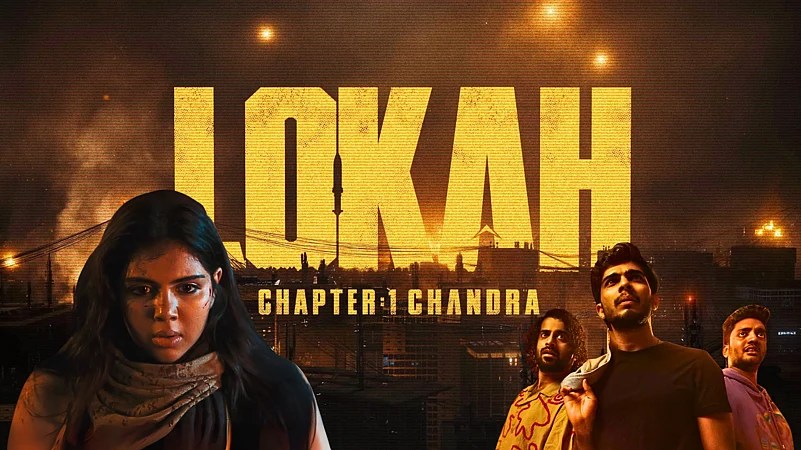
Over the past few months, the entire Internet, from Instagram to YouTube and everything in between, has been on a Lokah spree. Everyone’s been racing to drop reviews and spoilers before anyone else even gets a chance to think. I remember hearing in an interview, not sure if it was Dulquer, that this kind of frenzy comes from a positive place. And yes, of course, reviews do shape a movie’s lifespan to an extent.
I’m sharing my take now only because I wanted to give the film some breathing space to let it settle and sink in a bit. But here’s the catch: while I write this, I’m fully aware that there’s already a ton of reviews out there, and there might be a few overlaps.
Now that everyone already knows the plot, I don’t have to hold back on any spoilers. I’ve always been the kind of person who gets uncomfortable with anything that even remotely falls into the horror category. It’s rare that I give such movies a chance. But after what Malayalis once branded as “horror” with Manichitrathazhu, this is one film where I didn’t feel even a hint of fear while watching.
Given the long trail of yakshikathakal and the typical portrayals of Neelis as blood-sucking spirits in our movie landscape, Lokah really stood out for me.
This is mainly because of the film’s approach, through a lens of humour. Instead of treating the supernatural with fear or reverence, it gives you space for laughter. That shift in tone changes everything; it allows you to engage with the story lightly yet still stay invested.
One moment that really stayed with me is the scene that comes before Chandra’s past is revealed. It’s as if the film deliberately lets the audience sit in curiosity, “what is she?” mirroring what the people at the party must be thinking too. That suspended curiosity is smartly written; it makes the eventual reveal even more tender than shocking.
The background score, “Kiliye Kiliye”, floats in like a mischievous whisper. It’s playful, not eerie; melodic, not dramatic. But if you actually listen to the lyrics :
Kiliye Kiliye Mani Mani Meghathoppil,
oru malar nullaan pookum azhakin azhake.
There’s something deeply telling there. The song isn’t just background music; it’s almost a quiet commentary on her. Especially that line, “Uyarangaliloode pala naadukal thedi” wandering through many lands, across heights and distances. It feels like a cue about Chandra herself, someone who’s moved between worlds, between realms of the living and the remembered. This gives us a glimpse of her journey long before her past is actually revealed.
And then there’s her white dress, a small but clever detail. For decades, white has been the colour code for ghosts in our cinema, the pale, flowing symbol of something cold, eerie, and lifeless. But here, it feels like a reinterpretation. The white isn’t haunting; it is a reclaiming of that imagery.
Then there is Jango, the cat and his reaction is a sudden, slightly violent twitch that startles the room. On one hand, it’s the instinctive reaction animals are said to have when they sense something beyond human comprehension. Jango once belonged to Sunny’s ex, who handed him back at the beginning of the film. So when Sunny finds himself drawn to Chandra, he could be protesting this new pull.
Another detail I really liked while watching the movie was the connection between the apartments, the way Sunny and Venu look through the window to see what’s happening next door. It instantly reminded me of that scene from Vandanam, where Mohanlal and Mukesh spy on the apartment where Gaadha stays. I later heard in an interview that this was an intentional nod by Dominic Arun.
I’ll stop here. I really liked the film’s approach to the colour palette, the cinematography, and the tone it managed to hold throughout. More than anything, I appreciate the effort to keep it rooted, to resist the pull of turning it into a loud, larger-than-life spectacle.
 The D.O.T