Remote Evide? Cinema Thudangan Pokuva

I was listening to music at work yesterday when iMusic picked one of those old songs Mazhavil Kodiyil from Aniyan Bava Chettan Bava. A song with that simple harmony in the chorus. And it made me think.

There was a time when we waited for newspapers, interested only in the cinema page. We would skim through it in detail, checking from Asianet to Surya to Doordarshan to Kairali, just to see which movie was playing on Saturday, Sunday, or on any day off. And once you spotted one, waiting for that exact time to arrive. Running to the washroom before it started, timing everything around commercial breaks, taking a pillow, spreading yourself out on the floor, and then watching it while lying there. 

Sometimes the movie itself hardly mattered. You may have watched it before, or missed the first twenty minutes, or joined halfway through. But somehow it still felt exciting. Maybe because we couldn’t choose. We received what came to us. And in that waiting there was a strange kind of happiness

Funny how an old song can bring back not just memories, but entire ways of living. 

The Devil Wears Prada and the Question of Who We Truly Serve

I am 100% happy watching The Devil Wears Prada. I think all of us may be a little like Andy Sachs, or maybe Miranda, Nigel, or Emily. In the film, Andy enters the high-pressure world of Runway magazine, working under the powerful and demanding Miranda Priestly. Through that journey, we see ambition, sacrifice, loyalty, and the cost of success.

Andy is in Runway almost accidentally, not really caring about fashion but hoping the job will open doors for her writing career. Miranda sees something in her that others don’t and pushes her relentlessly. In some ways, Miranda shapes Andy. She demands excellence, sharp thinking, and resilience. That pressure forces Andy to grow quickly, understand the system, and perform under impossible expectations. Yet the way Miranda treats her is often harsh and dismissive. Andy is rarely seen as a person; she is mostly treated as a tool for Miranda’s needs. What begins as mentorship often slips into intimidation.

Miranda’s behaviour toward Emily shows another side of her leadership. Emily is fiercely loyal and invested in the Runway world. She works tirelessly to please Miranda, measuring her worth by Miranda’s approval. Miranda values Emily’s efficiency and dedication, but she rarely offers kindness in return. When circumstances change, Emily’s loyalty is easily set aside for the next practical decision. It reveals how the culture around power can reduce even the most devoted people to replaceable roles.

Nigel’s relationship with Miranda is more layered. Nigel understands Miranda’s world better than anyone. He admires her vision and supports her decisions, even when they are difficult. At times, Miranda trusts him and relies on his expertise, which shows a level of respect she does not often extend to others. When Miranda protects her own position at the expense of Nigel’s long-awaited opportunity, it becomes one of the most painful moments in the story. In that moment, we see the weight of leadership driven entirely by survival and power.

I would not call Miranda a villain. The story reveals her complexity. Beneath the sharp authority is someone carrying immense pressure and loneliness. There is a glimpse of vulnerability behind the reputation. In The Devil Wears Prada 2, there seems to be a subtle shift in Miranda. Time, experience, and perhaps reflection appear to soften some of the rigid edges of her leadership. She remains visionary and commanding, but there is a hint that she understands people differently than before.

Leadership may demand strength and high standards, but it should never remove dignity from the people who make the work possible. Miranda’s brilliance built an empire, but the story keeps reminding us of the human cost behind that brilliance.

As Christians, our understanding of work comes from a calling. Scripture reminds us in the Epistle to the Colossians 3:23–24 (NIV):

“Whatever you do, work at it with all your heart, as working for the Lord, not for human masters, since you know that you will receive an inheritance from the Lord as a reward. It is the Lord Christ you are serving.”

Our diligence, creativity, and excellence are not ultimately for the approval of human bosses or institutions, but for the glory of God. At the same time, our faith reminds us that every person bears dignity as God’s creation. Authority and leadership must therefore be exercised with humility, justice, and care for others. So while The Devil Wears Prada shows the ambition and power of the workplace, it also raises questions about the kind of people we become in that pursuit. For a Christian, success cannot mean reaching the top. It must mean reflecting Christ in the way we work, lead, and treat those around us. In the end, our work is not merely about achievement; it is about faithful stewardship before the One we truly serve.

Season 31 – Thanksgiving ’25 | Nov 27

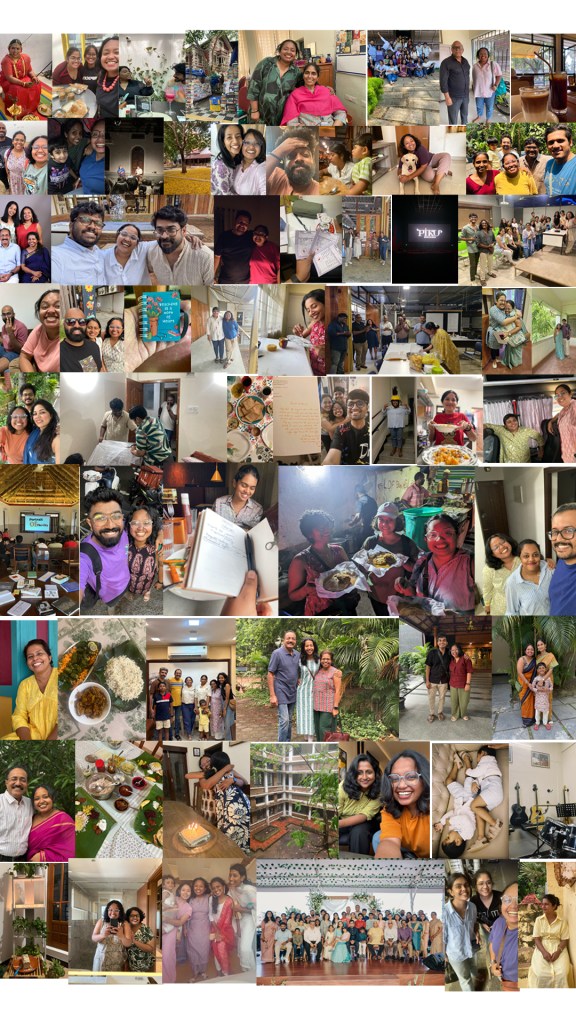
This Thanksgiving feels especially special. This year carried challenges that were more layered, more unexpected than anything in recent memory. And yet, through all of it, I’m grateful.

Grateful for God being my strength, my unwavering strength. For His grace that has held me in ways nothing else could.

And grateful for the beautiful people He has placed around me. Someone once told me that life is really about the moments. Whether they came as challenges, breakthroughs, or things still unfolding, this year was full of such moments.

The year began with weddings, joy, and unexpected reunions.

Students who showed up with flowers, friends who stayed constant, and a favourite city, Trivandrum, that kept calling me back. There were the little anchors too: book launches, proud moments, gelato conversations, and the people whose timing in my life feels perfectly choreographed.

There were major transitions: leaving WCFA, packing up studios, Mysore days filled with Goobabes, scooter rides with the Manja Keeridam, surprise meals, warm homes, and the unofficial packers-and-movers who made everything easier. There were goodbyes that were hard to accept, and a move back home after years a strange blend of rest and restlessness.

Then came the openings: the Portrait of the City workshop, the kindness of people who hosted me like family, writing work that kept me engaged, Chennai trips, birthdays, carrot cakes, and moments that quietly rebuilt my confidence.

And once again, Trivandrum not just memories now, but a city that welcomed me back with new people, new fellowship, new warmth.

And one of the biggest gifts this year: restarting my music lessons.

I was carried this year by so many hands: family, students, friends, mentors, colleagues, hosts, prayer partners, tea companions, encouragers, each one adding light exactly when I needed it.

I still don’t know what’s next, but here’s what I do know:

I’m surrounded. I’m strengthened. I’m guided.

And for every single person who showed up in calls, through reels, meals, drives, prayers, laughter, and those small everyday gestures, I’m grateful beyond words.

This Thanksgiving, my heart is full because God never stopped showing up through all of you.

Unfiltered

This piece doesn’t have an intent.
It doesn’t have a movie reflection.
It doesn’t sound like anything.

This isn’t for sense-making.

It’s just a spilling out.

Who are you?
What can you do?
Why do you get bored?
What does it mean when you say “passion”?
Why do you feel scared?
The risk you took, was it even a risk?
Who approves?
Are you numb or dumb?

Do you even want this, or do you just want to be seen wanting it?

Is this discomfort growth, or just another excuse?
Do you think too much? Or not enough?
When did everything become content?
Does anyone read to understand, or just to react?
Where do ideas go when they’re suffocated by speed?
Why is honesty uncomfortable?
What is the point of saying anything, if words have stopped meaning?
Is there a way to write without explaining yourself?

Does everyone feel disappointed, or just those who pay attention?

Are your dreams yours, or did you inherit them?

If you had no audience, would you still make things?

Unanswered.

Unfiltered.

Season 31:The One About the Little Things – Episode 10: When Friends Become Family

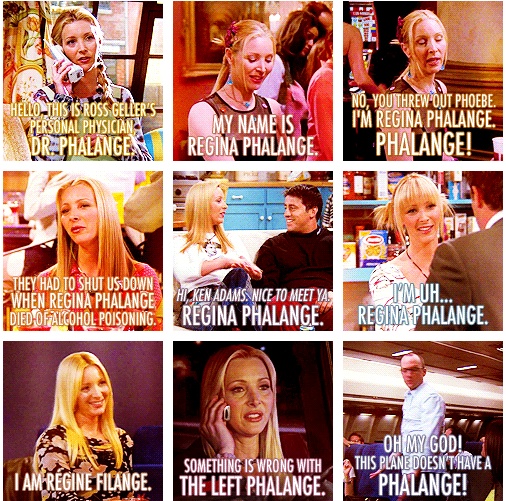
This piece might be relatable only to F.R.I.E.N.D.S. fans. I’m one myself, having watched the show so many times that I’ve lost count. Yet, there’s always that one particular episode that brings joyful tears every single time. Actually, there are a few such episodes, the kind that feel more heartfelt than humorous.

Season 10: Episode 12 – The One with Phoebe’s Wedding.

Prior to the rehearsal dinner, Phoebe has a problem finding somebody to walk her down the aisle – her stepdad was going to get a day release from prison to do it, but he ends up stabbing another inmate in the exercise yard and has to miss the ceremony. Phoebe asks Joey, if he’ll take her stepdad’s place, and he accepts. Joey, being Joey, starts to live the character. 

There’s this beautiful scene where Joey wants to have a chat with Mike.

Joey: “I want you to take this seriously. Phoebe is very, very important to me, okay? And I want to make sure that you’re going to take care of her.”

Mike: “Joe, I love Phoebe, and she’s the single most important thing in my life. I’d die before I let anything happen to her.”

Joey: “That’s what I wanted to hear. Because she’s family, okay? And now you’re going to be family, and there’s nothing more important in the whole world than family.”

Of course, the Joey–Chandler duo and the bond they share are incredible too. There are so many scenes that show Chandler looking out for Joey, even after moving in with Monica, he still keeps a “Joey’s room” in their new house. And in his own way, Joey’s always there for Chandler too, through so many episodes.

Phoebe, on the other hand, never had a normal family or a normal childhood. And out of all the weddings shown in the sitcom, hers felt the most real, yet still a little magical, as if everything just fell perfectly into place. Rachel suggests they get married in the street, knowing exactly what Phoebe would love; Monica says “affirmative” in that classic Monica way. And then comes another beautiful moment: Joey having to shift roles to become the minister and conduct the wedding, and finally, Chandler walking Phoebe down the aisle. Somehow, it all ties back to what the show does best, creating family out of friendship and turning chaos into something more tender.

Every time I see her walking down the aisle, and every time I see all of them just unanimously being there for that one friend, makes me cry. Joey, being the minister, delivered his best, not messing it up, because he knows it is family.

I really want everyone who reads this to have, if not all of them, at least one of them in your life. Friends becoming family isn’t ready-made, and I don’t mean to say you need to replace your family, but when friends fit in that rootedly, it’s a true blessing.

You might be a Phoebe to them, a Joey to them, a Chandler to them, a Rach, a Ross, or a Monica. Personally, I feel Joey and Phoebe were the glue that held it all together, quietly supporting everyone in their own ways. Like Phoebe calling Joey as “Estelle,” because she knew he couldn’t handle all the change happening around him. Or Ross getting a bicycle for Phoebe because she’d never had one as a child, a small gesture that said everything without needing words. And then Chandler, with that same instinctive kindness, hid the truth that the chick and duck had died, saying they’d gone to a farm.

Maybe that’s why F.R.I.E.N.D.S. never really feels like a show to me anymore. It’s more like a familiar corner I return to, the voices, the laughter, the small everyday moments that make everything feel okay again. Every rewatch feels like catching up with people I somehow know. In its own funny, imperfect way, it reminds us that chosen families are real, that care shows up quietly.

It reminds me that friendship doesn’t have to be grand or loud; it’s often about the smaller gestures: a friend who remembers your fondness for postcards, someone who checks on you randomly because they sensed something was off, the one who gives you a space to crash when you’re absolutely low, who buys you food without making a big deal of it, or quietly assures you in Christ when words fail. The one who sends you some money when you’re broke, takes you out on a late-night drive just so you can vent it all out, bakes you the best cookies, or calls just to say, “Hey, dude! What’s up?”, or sometimes just says no flat on your face, without any sugarcoating. Sometimes it’s a tight squishpeesh hug, a video call that makes you forget about the drama until the drama itself becomes our little comedy, or just that evergreen Joey–Chandler hug GIF landing at the perfect time.

When you finish reading this, I hope you smile, perhaps thinking of that one episode or that one friend who, in their own quiet way, has been your Joey, your Phoebe, or your Chandler. Because these are people with whom you BE and not BECOME.

Let’s Lokah Today!

Over the past few months, the entire Internet, from Instagram to YouTube and everything in between, has been on a Lokah spree. Everyone’s been racing to drop reviews and spoilers before anyone else even gets a chance to think. I remember hearing in an interview, not sure if it was Dulquer, that this kind of frenzy comes from a positive place. And yes, of course, reviews do shape a movie’s lifespan to an extent.

I’m sharing my take now only because I wanted to give the film some breathing space to let it settle and sink in a bit. But here’s the catch: while I write this, I’m fully aware that there’s already a ton of reviews out there, and there might be a few overlaps.

Now that everyone already knows the plot, I don’t have to hold back on any spoilers. I’ve always been the kind of person who gets uncomfortable with anything that even remotely falls into the horror category. It’s rare that I give such movies a chance. But after what Malayalis once branded as “horror” with Manichitrathazhu, this is one film where I didn’t feel even a hint of fear while watching.

Given the long trail of yakshikathakal and the typical portrayals of Neelis as blood-sucking spirits in our movie landscape, Lokah really stood out for me.

This is mainly because of the film’s approach, through a lens of humour. Instead of treating the supernatural with fear or reverence, it gives you space for laughter. That shift in tone changes everything; it allows you to engage with the story lightly yet still stay invested.

One moment that really stayed with me is the scene that comes before Chandra’s past is revealed. It’s as if the film deliberately lets the audience sit in curiosity, “what is she?” mirroring what the people at the party must be thinking too. That suspended curiosity is smartly written; it makes the eventual reveal even more tender than shocking.

The background score, “Kiliye Kiliye”, floats in like a mischievous whisper. It’s playful, not eerie; melodic, not dramatic. But if you actually listen to the lyrics :

Kiliye Kiliye Mani Mani Meghathoppil,
oru malar nullaan pookum azhakin azhake.

There’s something deeply telling there. The song isn’t just background music; it’s almost a quiet commentary on her. Especially that line, “Uyarangaliloode pala naadukal thedi” wandering through many lands, across heights and distances. It feels like a cue about Chandra herself, someone who’s moved between worlds, between realms of the living and the remembered. This gives us a glimpse of her journey long before her past is actually revealed.

And then there’s her white dress, a small but clever detail. For decades, white has been the colour code for ghosts in our cinema, the pale, flowing symbol of something cold, eerie, and lifeless. But here, it feels like a reinterpretation. The white isn’t haunting; it is a reclaiming of that imagery.

Then there is Jango, the cat and his reaction is a sudden, slightly violent twitch that startles the room. On one hand, it’s the instinctive reaction animals are said to have when they sense something beyond human comprehension.  Jango once belonged to Sunny’s ex, who handed him back at the beginning of the film. So when Sunny finds himself drawn to Chandra, he could be protesting this new pull.

Another detail I really liked while watching the movie was the connection between the apartments, the way Sunny and Venu look through the window to see what’s happening next door. It instantly reminded me of that scene from Vandanam, where Mohanlal and Mukesh spy on the apartment where Gaadha stays. I later heard in an interview that this was an intentional nod by Dominic Arun.

I’ll stop here. I really liked the film’s approach to the colour palette, the cinematography, and the tone it managed to hold throughout. More than anything, I appreciate the effort to keep it rooted, to resist the pull of turning it into a loud, larger-than-life spectacle. 

Routine and Long Shadows

For those of you who know me, I watch a film at least three times, minimum. The maximum could probably sound a bit obnoxious to many, but that’s okay. This piece isn’t really about how many times I rewatch films, but about one such rewatch: Thappad [Slap], released in 2020.
I’m assuming you’ve seen the film. If you haven’t, feel free to watch it at your convenience – you may or may not align with my point of view, and that’s fine too.

The film begins with a prelude of five relationships in the city at night, each caught in small, everyday gestures – a popsicle in hand, a window rolled down, a casual conversation that slips into tension. These include:

  • A young couple sharing a casual moment,
  • A couple in a car where the woman’s troubled marriage looms in the background,
  • An older couple going through memories and quietly sharing comfort,
  • A mother and daughter awkwardly discussing companionship and loneliness, and
  • A working-class couple whose banter masks frustrations.

What’s remarkable is that these vignettes rely on everyday actions rather than exposition. The popsicle becomes a subtle motif running through the scenes – sometimes a small comfort, sometimes an act of sharing, sometimes a symbol of frustration when discarded. It’s through these gestures that the film introduces themes of emotional disconnect, dependency, forgiveness, and resentment without explicitly stating them.
This prelude doesn’t explain relationships; it observes them. The recurring gestures create a shared emotional texture that quietly prepares the viewer for the exploration of marriage, identity, and intimacy that follows.

The prelude is then followed by a sixth relationship – one that the film gradually centres on. Here, the couple’s interactions revolve around everyday disruptions: a failing internet connection, a faulty printer. What stands out is how the husband’s words repeatedly frame everything as “your” problem – “your internet,” “your printer” – even when the issues affect them both. The repeated use of “your” quietly underscores an emotional distance, where responsibilities, attention, and care are divided rather than shared. Their banter feels playful, but it reveals how alienation can creep in through language – how everyday conversations, peppered with “your,” “mine,” or “I don’t know,” expose cracks in intimacy.

After introducing these six relationships through quiet gestures and everyday tensions, the film settles into a rhythm centred around one repeated scene – the morning routine. Amu’s routine unfolds with small, deliberate acts: switching off the alarm at 6 AM, collecting milk and the newspaper from the doorstep, cutting a few lemongrass leaves, and making black ginger tea with lemon grass for herself. In all this, she is jovial, bubbly, and spontaneous – fully inhabiting these moments without hesitation. Later, it’s revealed that this particular tea is one of the few things she has kept from her mother’s care, a small inheritance of comfort and familiarity.

The quiet observations of routine and distance build up to the moment that defines the film’s turning point – the slap. It takes place at a party that Vikram hosts for his colleagues and friends, meant to celebrate their upcoming move to London. The celebration, however, turns sour when Vikram learns that the move isn’t happening. In the midst of the heated argument between him and a senior colleague, Amu tries to calm him down. As she intervenes, he turns and slaps her – in front of everyone. The film captures the awkward, stunned silence that follows.

Though shocked, Amu continues the evening, but bitterness slowly creeps in. The routine they once shared begins to fracture. Eventually, she decides to move to her parents’ house. Vikram’s reaction is less about her well-being and more about appearances:
“What will my situation be? What will I say to people?”
This concern for reputation rather than responsibility makes the emotional distance undeniable.

After the slap, many around Amu try to downplay what happened. They repeat the same refrain:
“It was just a slap.”
The words are meant to normalise the act, to make it seem minor, forgivable, or part of marital life. But Amu’s response cuts through the casualness:
“It was just a slap, but he has no right to hit me. No one has.”
With this, the film makes its stance clear. The incident isn’t about the force of the blow or whether it caused physical injury – it’s about the violation of dignity, respect, and consent. Amu’s refusal to accept the trivialization of violence is what marks the turning point of her journey. Rather than react with anger, she asserts a boundary rooted in self-respect, challenging both her husband and the societal attitudes that excuse such behaviour.

The repetition of “It was just a slap” by others highlights how normalised violence can be, while Amu’s quiet but firm response shifts the conversation. The film doesn’t rely on dramatic confrontation; instead, it uses restraint to expose how easily everyday dismissals can perpetuate abuse. Amu’s insistence that “no one has the right” reclaims her voice and reframes the meaning of love, care, and partnership.

After exploring the events of Thappad, it is interesting to turn our eyes to another film that examines marital dynamics, though in a very different cultural and narrative context: the Malayalam film Njangal Santhushtaranu (1999), starring Jayaram and Abhirami. The film delves into the dynamics of a newlywed couple, Sanjeevan and Geethu, navigating the challenges of marital life. Sanjeevan, a dedicated police commissioner, lives with his widowed father and two younger sisters. Geethu, raised in a privileged environment, faces difficulties adjusting to her new home and the expectations that come with it – this is the plot displayed.

This difficulty is not simply about lifestyle differences; it is a reflection of underlying patriarchal structures. She is portrayed as “high-maintenance,” a label that subtly reinforces the idea that women from more comfortable backgrounds must adapt to domestic spaces dominated by patriarchal expectations.

Geethu enters her marriage with a sense of self-assuredness, stemming from her privileged background. Raised in an environment that values education and independence, she is a liberated woman. However, this perception is quickly challenged as she steps into her new role as a wife in Sanjeevan’s household. Her inability to speak Malayalam and unfamiliarity with domestic chores are highlighted, not as personal shortcomings, but as indicators of her deviation from the traditional expectations of a wife. Sanjeevan’s family imposes their expectations upon Geethu, viewing her as an outsider who must conform to their established norms. Her resistance to these impositions is met with ridicule and disdain, positioning her as the “other” within the family.

The emotional labour required to navigate these expectations takes a toll on Geethu. Her actions, such as the prank involving Sanjeevan’s disappearance, stem from a place of frustration and a cry for attention. Instead of understanding her emotional needs, the family responds with punishment, further alienating her. This response reflects a broader societal tendency to dismiss women’s emotions and prioritise familial reputation over individual well-being. The revelation that Geethu was adopted serves as a pivotal moment in the narrative. This disclosure is used to diminish her identity, stripping her of her familial ties and reducing her to a mere object to be moulded into the “ideal” wife.

Throughout the film, Geethu (Abhirami) is subjected to multiple slaps by her husband, Sanjeevan (Jayaram). These instances are not isolated but recur at various points in the narrative, each time reinforcing a pattern of control and dominance. The slaps are not just physical acts of violence but symbolic gestures that reinforce the idea that a woman’s place is subordinate to her husband’s authority.

Both films interrogate the dynamics of male authority in marriage, but they do so differently: Thappad through the lens of moral clarity and the consequences of one unacceptable act, and Njangal Santhushtaranu through normalized repetition and humor that masks structural oppression.

Before I conclude, I want to add something more. Husbands often seem to take a certain joy in making fun of their wives in front of their friends, colleagues, or even family. It’s usually framed as harmless joking – teasing about habits, forgetfulness, appearance, or quirks. But what stands out is how this humor is rarely questioned, how it’s accepted as part of male bonding or lighthearted banter.

What starts as a joke often reinforces an unequal dynamic – one where the wife becomes the subject of ridicule rather than a respected partner. The laughter of others adds to the weight, making it harder for the woman to speak up or call it out. Over time, these small humiliations accumulate, shaping how she sees herself and how the relationship operates.

It’s not always about open cruelty; often, it’s casual, even affectionate. Yet, this kind of humour can mask patterns of control and disregard. By normalising these moments, it becomes easier to overlook how they chip away at a woman’s dignity, reinforcing stereotypes about what’s acceptable in marriage. 

I’ll be sharing a write-up on women in the Bible next. One affirmation that stands at the heart of that reflection is this: both men and women are created in the image of God (Genesis 1:27) – equal in worth, though distinct in role. The distinction between roles is not one of superiority or inferiority, but of different expressions of service and responsibility within God’s design. This understanding shapes how we view dignity, identity, and partnership – not in opposition, but in complementarity.

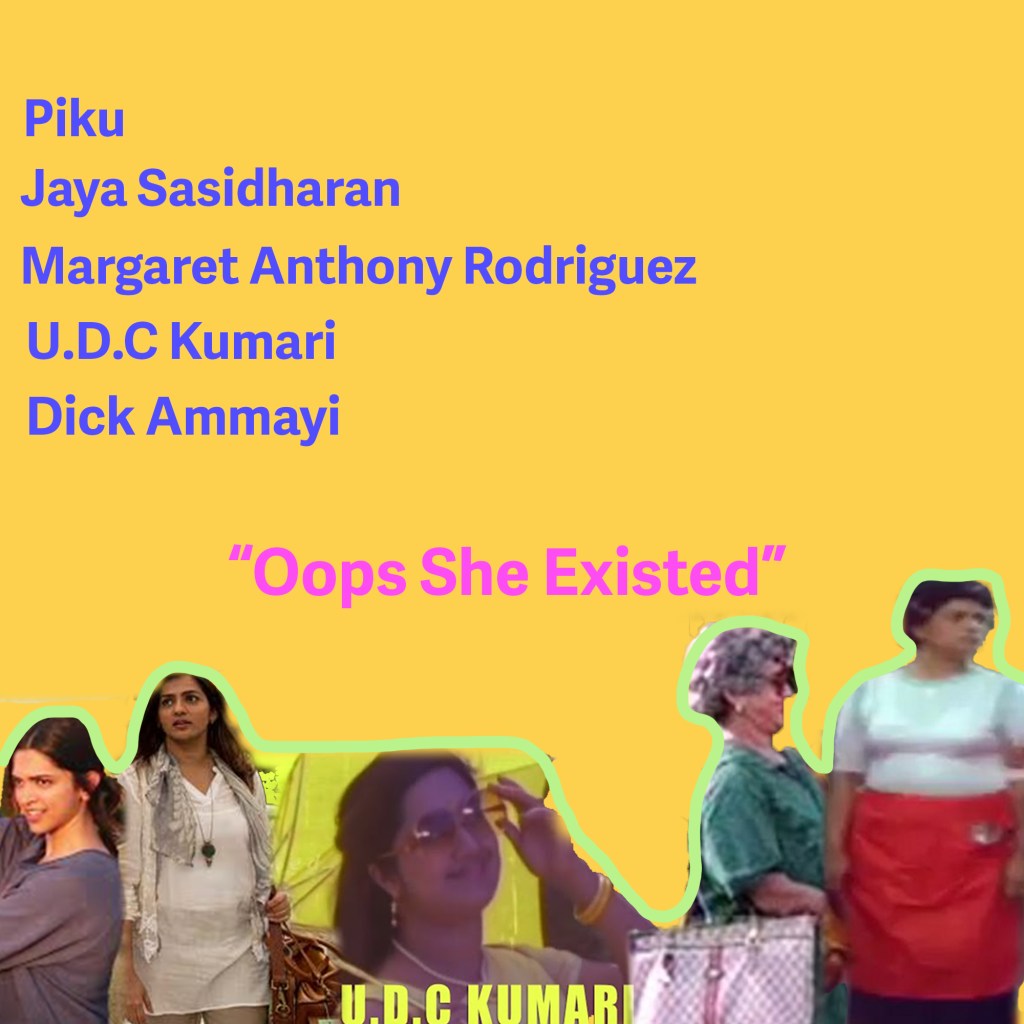
“Oops She Existed”

Female characters in Indian cinema have often been reduced to binaries: the good woman vs. the bad, the ideal vs. the irritating. But now and then, some characters manage to slip through. They don’t fit the mould neatly. They complicate, disrupt, or quietly question the roles assigned to them.

Piku from Piku (2015), Jaya Shashidaran from Qarib Qarib Single (2017), Dick Ammayi from Boeing Boeing (1985), UDC Kumari from Dr. Pashupathi (1990), and Maggi Aunty from Vandanam (1989).

What do these women have in common? On the surface, they belong to different genres, periods, and cultures. But look closely, and you’ll see they are all navigating a world that isn’t built for them, each in her own way, with a certain stubborn grace.

None of them were written as “feminist” characters. In fact, most were played for laughs or dismissed as side characters. But rewatch them today, and something shifts. Their small resistances, their sarcasm, their silence, they say a lot more than what’s on the page.

Dick Ammayi – Boeing Boeing (Sukumari)

Dick Ammayi is the household’s drill sergeant. In a film where the hero juggles three airhostess girlfriends, she’s the only one who knows what’s going on and doesn’t find it amusing. She manages the lies, the schedules, the mess,  and does it all while staying five steps ahead.

You can’t miss her outfit: a crisp white blouse, bright red apron, and black skirt. She looks like she’s running a military kitchen, not a bachelor’s house. It’s not about fashion, it’s about function, authority, and zero-nonsense.

She’s often the butt of jokes. Too strict. Too loud. Too “mannish.” But there’s power in the way she owns her space. She doesn’t ask for respect, she assumes it. And that, in the 1980s, was quietly radical.

UDC Kumari – Dr. Pashupathi (Kalpana)

Kumari, the Upper Division Clerk at the panchayat office, is hard to miss, with oversized sunglasses, sleeveless blouses, plain yellow chiffon sarees, and a voice that carries across rooms.

She gossips, dreams of romance, and doesn’t filter a single thought. She might seem silly, but she’s one of the few women on screen who is single, expressive, a little dramatic, and completely unapologetic.

Kumari isn’t polished, but she’s real. She doesn’t play it cool. And that’s exactly why she stays with you.

Maggi Aunty – Vandanam (Sukumari)

Margaret Anthony Rodriguez, better known as Maggi Aunty, is Gaadha’s guardian in Vandanam. Gaadha, a copywriter at an ad agency, lives with Maggi Aunty as a paying guest. Maggi isn’t a relative or a caretaker in the traditional sense. She’s just… there.

Her fashion sense is unmistakable, short silver curls, massive sunglasses, oversized bags, printed nighties, pastel blouses, skirts and trousers. She’s both “foreign-returned” and fiercely local. She talks too much, knows everyone’s business.

Maggi doesn’t apologise for her age or her loudness. She owns it. And in a cinema that often sidelines older women into silence or service, she’s just out here living, loudly and curiously stylish. She doesn’t serve the plot she steals it.

Jaya Sashidaran – Qarib Qarib Single (Parvathy)

Jaya is a widow in her 30s, living alone, working, and just getting by. She’s not lonely, but she’s not quite okay either. She’s done everything she was supposed to do, but the grief still lingers in the corners.

Her look speaks volumes, soft cotton kurtas, subtle colours, no makeup, and that practical, slightly severe hairstyle that says she’s focused on everything except herself. She’s not dressing for romance. She’s dressing to get through the day. It’s as though she’s deliberately stepping away from visibility, and yet she stands out for exactly that reason.

Jaya doesn’t open up easily. She’s dry, a bit uptight, and emotionally armoured. But she also knows how to hold her ground. The film doesn’t force her to fall in love or be “fixed.” It just gives her space. And she uses it.

Piku – Piku (Deepika Padukone)

Piku is tired. She’s not a tragic character; she’s just doing too much, all the time. She’s managing work, her father, her house, her emotions, and she’s run out of grace for small talk.

Crisp kurtas, minimal makeup, tied-back hair – no frill. She snaps often, jokes rarely. Her father drives her up the wall. She loves him. She resents him. She protects him. It’s all there, layered and messy.

“Ten times more strange, weird, irritating, annoying… I know what you mean, I know it’s weird, it’s okay…”

That one line says it all; she’s done explaining herself.

Each of these women exists in a world that wants them smaller. Quieter. Nicer. But they push back, sometimes loud, sometimes soft, sometimes just by staying.

Dick Ammayi claims domestic space with unshakable authority

UDC Kumari refuses to be ashamed of being loud or alone

Maggi Aunty doesn’t care if she fits in; she shows up.

Jaya takes her time and doesn’t perform healing

Piku doesn’t romanticise sacrifice; she survives it

They’re not revolutionary on paper. But in a cinematic landscape that often erases women the moment they age, complain, complicate, or speak too much, just existing with this kind of clarity is its own quiet rebellion.

They’re not perfect. But they’re present.

A possible scene: all five, in one room

Piku stirs her tea quietly. Jaya scrolls her phone but isn’t reading. UDC Kumari adjusts her oversized sunglasses indoors. Maggi Aunty opens her fifth pack of peppermints. Dick Ammayi taps her foot impatiently.

They all laugh. It’s not loud. But it’s enough.

Manipulation Und, Gaslighting Und, Politeness Und…..

There are some calls, some people, that would drive you crazy, actually frighten you, because of the evilness layered in the conversation. Through this piece, I’m gonna discuss different kinds of pretentious, malicious, venomous people, not just ones I’ve encountered, but I’m sure you all have witnessed or experienced too.
And to make things more entertaining (and painfully accurate), each type is explained through a few unforgettable characters from Malayalam cinema.

Type 01: The jealous one
.

Now, this kind of jealousy doesn’t always announce itself loudly. It wears a smile, asks polite questions, compliments your saree, but the eyes give it away. Jealousy can stem from anything: the way you laugh freely, or how easily people talk to you. It’s rarely about big things. It’s always the small, lived-in, everyday things that make them burn.
Take Kanchana from Thalayanamanthram. The simmering, passive-aggressive jealousy, it’s her. She enters her husband’s ancestral home like she’s the queen of decorum, and slowly, methodically, starts observing and dismantling. Her insecurities turn into sharp judgments disguised as concern. Her jealousy over her sister-in-law’s ease and joy becomes this slow poison she feeds into her husband’s ears. And the worst part? She masks it all under the label of “culture,” “upbringing,” or “wanting the best.”
But Kanchana isn’t a monster. That’s what makes it scary; she’s real. You might have met her at a cousin’s wedding. She might be sitting across from you during Onam lunch, pointing out gently how you’ve “changed” after your promotion. She might be in your circle, camouflaged in tradition and thin smiles. The jealous ones are rarely violent. They simply plant doubts and step back.


Type 02: The one who manipulates.

This one doesn’t yell, doesn’t blame, and rarely asks directly. Instead, they sacrifice silently, make decisions “for your own good,” and let you carry the burden of gratitude. It’s not open control, it’s quiet rewiring. You grow up thinking you owe them your life. They don’t just guide you, they script your life, and all the while, they make you believe it’s your choice.
Vanaja from Achuvinte Amma. Played by Urvashi with unnerving precision, Vanaja is the kind of mother who loves fiercely, but with conditions buried under layers of protection. Her manipulation doesn’t come from malice; it comes from fear, from an unresolved past, from wanting to keep her daughter close and untouched by pain. But in doing so, she hides the truth, erases the past, and shapes the future on her own terms.
She makes Achu feel safe, but only in a world Vanaja controls. And when the daughter begins to step out, ask questions, fall in love, or choose, Vanaja withholds, sulks, withdraws love, until silence becomes punishment. The worst part? She never calls it manipulation. She calls it “a mother’s duty.”
Manipulators are dangerous not because they shout, but because they whisper. They smile. They nod. They understand. And then they slowly bend reality around you.

Type 03: The one who plays the victim

This one is always suffering. Always misunderstood. The world is out to get them, and somehow, you are the villain in their story. You forgot to return their call? They’re hurt. You take a stand for yourself? You’ve become cold. You get ahead in life? You’ve left them behind. It’s exhausting, because you’re constantly tiptoeing around their emotions, while they casually bulldoze yours.
While Dasan (Nadodikaatu) is lovable and genuinely struggling, he constantly positions himself as the one who’s had it worst. Every time Ramettan tries to lighten the mood or solve something, Dasan wallows deeper. He makes his misfortunes into a badge ”ente jeevitham muzhuvan nashtam aayi!” It’s funny, but it’s also classic victim-playing in friendships, where one person’s gloom takes over everything.

Type 04: The one who is always competing

This one turns everything into a scoreboard. You bought a new dress? They had one stitched in Bombay last month. You shared a happy moment? They one-up it with something louder, glossier, or just more tragic, because even suffering is a contest. It’s not about joy or pain, it’s about staying ahead in the emotional economy of any room they walk into.
They’re not always loud. Some of them play the game subtly, through pointed compliments, selective silence, or occasional envy-tinged applause. They’re your friend but also your shadow rival. And they get deeply uncomfortable if you begin to shine without their permission.
Satheeshan Kanjikuzhi in the movie Classmates is the classic achiever-turned-resentful-competitor. What starts as ideological rivalry with Sukumaran slowly gets personal. He is constantly trying to outdo, expose, or counter him both politically and emotionally. This kind of competitive energy hides behind labels like “principle” or “truth,” but deep down, it’s about not wanting someone else to take the spotlight.

Type 05: The fake well-wisher


This one is sugar dipped in salt. They smile, ask all the right questions, use words like “so proud of you!” but only when others are watching. Alone, the tone shifts. The compliments become caution. The encouragement comes with a side of warning. “I’m just saying this for your own good…” is their favourite opening line before they cut you down, softly.
They never oppose you directly. They just plant seeds. Doubt, fear, hesitation. They’ll ask if you’re “sure” about your decisions, point out someone who did something similar and “failed.” And they never leave a trace. You’re left second-guessing, feeling weird, but unable to put a finger on why.
Think of Dineshan from Vadakkunokkiyantram. Insecure to the core, but hiding behind a facade of concern. He constantly monitors his wife, questions her choices, cloaks his jealousy as protectiveness. To the world, he’s the doting husband. But beneath that is a man who cannot bear the idea of his wife shining brighter than his own fragile ego.
Fake well-wishers often come wrapped in care. They call at just the right moment. They’ll even pray for you. But deep inside, they’re hoping you don’t outgrow the version of yourself that made them feel superior. Your glow threatens their narrative, so they pretend to polish it while actually dimming it.

Type 06: The one who always takes the moral high ground


This one floats above us all. Never wrong. Never loud. Just disappointed. They don’t argue, they “express concern.” They don’t fight, they “hold principles.” And they always, always manage to position themselves as the one who is “doing the right thing,” even when they’re being cold, manipulative, or downright cruel.
They won’t stab you in the back. No, they’ll stab you in the heart and hand you a lecture about why you needed to be stabbed. This person thrives in judgment. They offer unsolicited advice dressed as wisdom and make you feel like your choices are somehow less pure, less noble. Other people often believe them, because righteousness wears good lighting.

A pitch-perfect example is Prabhakaran from Sandesham, played by Sreenivasan. Steeped in ideology, constantly quoting political theory, and yet completely blind to the wreckage he causes within his own home. He belittles, patronises, and dismisses anyone who doesn’t align with his worldview. His morality isn’t about doing good, it’s about feeling superior. And through it all, he paints himself as the martyr, the misunderstood revolutionary.

Type 07: The emotional leech


This one doesn’t drain your money or your time, they drain your energy. They arrive heavy, stay heavier, and leave you exhausted. Every interaction feels like a counselling session you didn’t sign up for. They need to “talk,” but they don’t really want solutions, they just want to unload. Again. And again. And again.
You could be having a decent day, and then they call. Suddenly, you’re knee-deep in their existential crisis, relationship drama, or workplace trauma, and you’re expected to listen, soothe, and somehow fix it, without ever asking for anything in return. Because if you express a need, they vanish. They only show up with their suitcase, never help you carry yours.


Type 08: The Hyper-Performer (everything is for show)


This one is never off-duty. They don’t just speak, they announce. Every emotion is performed, every situation made into a stage. You’ll find them at the centre of the room, narrating events like they’re on stage at a drama competition no one else signed up for.
They don’t do sincerity. They do spectacle. Even when they cry, it’s curated. Even when they’re helpful, it’s headline-worthy. You never really know who they are, because even they have forgotten where the performance ends and the person begins.

Pillaichan from Meesa Madhavan, played by Jagathy Sreekumar in peak form. Pillaichan is the kind of person who wraps himself in fake authority, overacts simple interactions, and constantly positions himself as more important than he actually is. He lectures, postures, name-drops, and often lands in messes of his own making, all while keeping up appearances. He’s not just trying to live, he’s trying to matter. Loudly.
Hyper-performers like Pillaichan aren’t evil. They’re just exhausting. Their identity depends on how others see them. If you stop watching, they stop existing. Which is why they make sure the spotlight never leaves.


Type 10: The Boundary Crosser


They think love means access. Friendship means full disclosure. Family means entitlement. They don’t ask, they assume. You say “I’m not comfortable talking about that,” and they reply with “Ayyo, I was just asking out of concern!” Suddenly, your no becomes an insult. Your privacy becomes their problem.
They believe their closeness gives them rights, over your choices, your time, even your body. They ask intrusive questions, comment on things they have no business discussing, and treat your personal space like public property. If you push back, you’re the one being “difficult.” If you assert a boundary, you’re “too modern,” “too proud,” or “not like before.”
They don’t want intimacy. They want unfiltered access.

Type 11: The Polished Opportunist


They don’t take. They network. They don’t disappear, they’re just “super busy.” But trust this: they only resurface when the conditions suit them. They always know when to call—just before you’re doing well enough to help, or when they’re in trouble. And the first line? “Hey, I was just thinking of you!”
They wrap self-interest in charm. Their tone is warm, their timing immaculate, their intentions foggy. You’re never sure if they really care, but you go along because they never cross the line outright.
The polished opportunist is rarely toxic in the traditional sense. They’ll never yell, guilt, or demand. They just extract. Gently. Skillfully. And leave you wondering if you imagined the whole thing. Until the next time they say, “Hey! Long time! What are you working on these days?”
They don’t want connection. They want leverage.


Type 12: The Insecure Critic (who masks their envy as “feedback”)


They’ll never say they’re jealous. That’s too crude for their self-image. Instead, they’ll say:
“Don’t take this the wrong way, but…”
“It’s nice, but maybe tone it down a bit?”
“You’re doing well now, but let’s see where it goes.”
Every compliment is a little bruised. Every suggestion comes with an invisible dent.
These are the people who can’t let you have a full win. Something must be improved. Every achievement you share gets diluted: “Oh, I’ve seen someone do that too,” or “Is that really what you want to focus on long-term?
They don’t want to guide you. They want to keep you small enough to feel secure beside you.

Some of them smile. Some of them sulk.
But all of them leave you with one final thought:
“Enthina njan ee call attend cheythu?”
But it’s okay.
Toxic people und. Block button und. Peace und.


Acquired Familiarity

In the cities I have lived in, I tend to develop a fondness for certain spots that offer me comfort, good coffee, a corner, etc. During my stay in Mysore, I became a regular at a few eateries, one being CCBC, and the other, Hideaway Coffee at Yadavagiri.

The familiarity at CCBC is such that there’s even a coffee called “Architect’s Coffee – strong, less sugar,” which is exactly what I need. I see familiar faces from the very first day I started going there. We’ve all begun to greet each other, say hello even outside CCBC. And, knowingly or unknowingly, thanks to the loud chit-chats the group often engages in, you end up overhearing stories about someone’s trip, a knee ache, or a daughter going to play basketball.

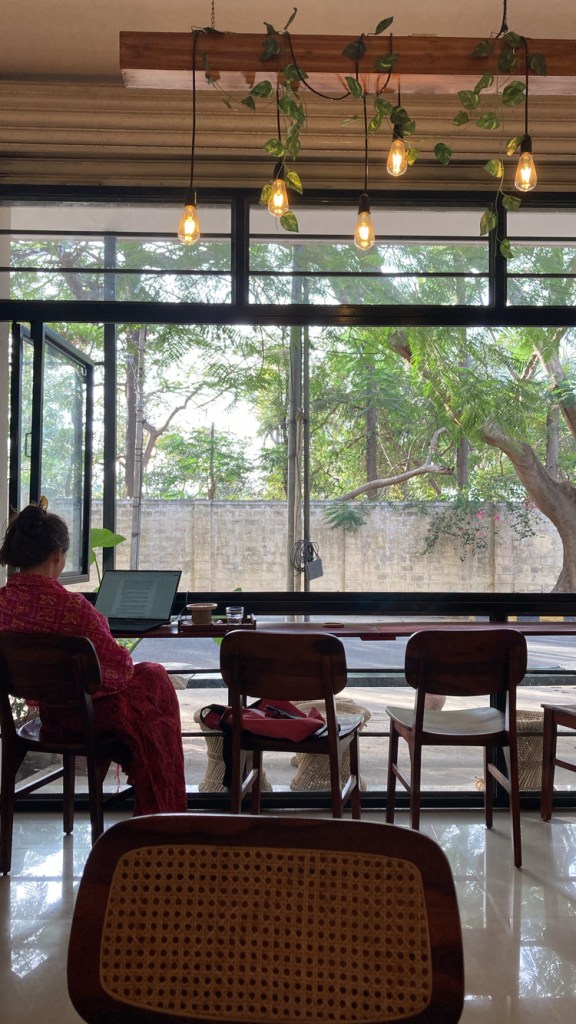
Now, I wouldn’t call this a place where I can contemplate or spend an entire day; it’s more of a place that gives you the kick to start your day, and then you figure out the rest elsewhere. That’s where Hideaway truly becomes a hideaway from the buzz and chirping, a quiet, simple insert opening towards the green on Paramahamsa Road in Mysuru.

I found this cafe through a reel on Instagram, thanks to the algorithm that monitors my coffee craving. I went at least thrice to see if it was open, but it wasn’t. One fine day, I sent an Insta DM, figured out it was finally open, and went ahead.

It’s a subtle urban insert within the largely residential fabric of Yadavagiri. The cafe doesn’t try to break away from its context; instead, it settles in gently. From the moment you enter, you sense a spatial quietness. The space is framed by large glass panels that fold away to let the outdoors in, creating a seamless visual extension into the avenue of trees outside. Inside, a smaller counter seating faces a mesh screen dotted with planters, some hanging, others spilling over ceramic pots. To add to the ambience are the rattan-backed chairs, deep-toned wooden furniture, and hanging filament bulbs, all held together by a calm, earthy palette.

Hideaway is not performative. It’s the kind of place where silence is allowed, even welcomed. And some days, that’s the most comforting form of company.

It feels even more special these days, as I get to share conversations with Versha, Ashwani, and Teja.

It’s a different rhythm from CCBC, quieter, more introspective. But over time, something familiar settles in. As Friends once put it, “It’s just a bunch of friends, sitting around, drinking coffee.” Maybe that’s all it needs to be, no big plans, no forced conversations. Just coffee, company, and the comfort of a place that doesn’t ask much of you.