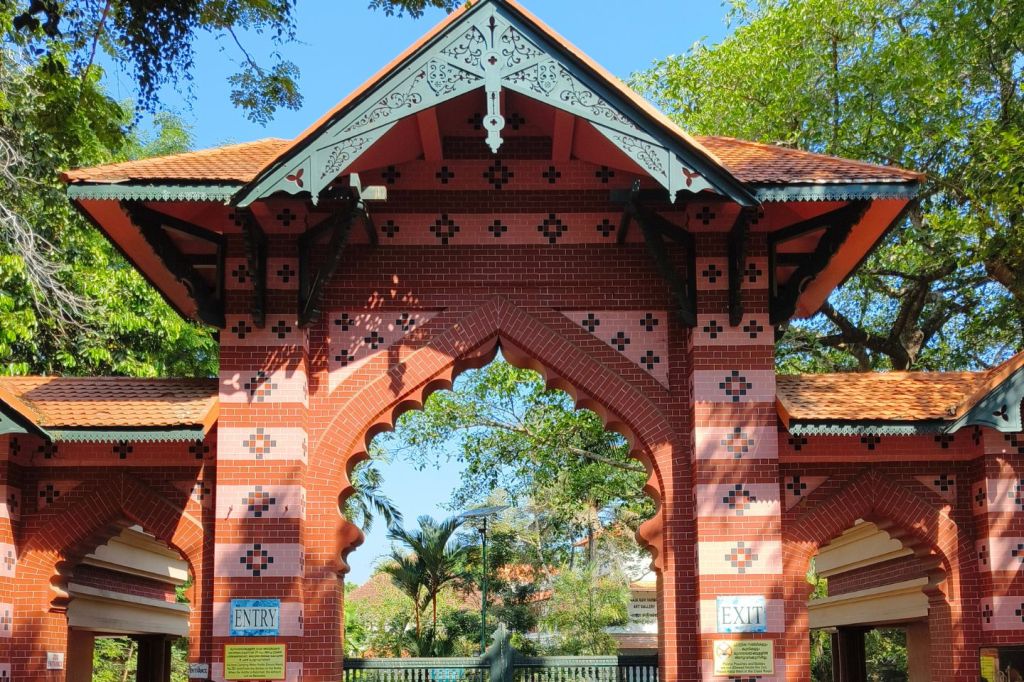
I strongly oppose the proposal to relocate the Thiruvananthapuram Zoo. Not because the city should resist change, but because this is precisely the kind of decision where development needs to be more thoughtful about what it chooses to give up.
A city’s progress cannot be measured by how much of its existing fabric it can replace.
The 55-acre zoo is not vacant land. It is not a development opportunity waiting to be unlocked. It is already a functioning piece of the city’s ecological, cultural and public infrastructure.
And that distinction matters.
At any given time, if someone asks me where I would want to live, my answer comes almost instinctively: Thiruvananthapuram.
Not just because I have memories there, but because of what the city is.
It is walkable. It has public spaces that people actually use. It has enormous amounts of greenery woven into everyday life. It has a slower, more grounded relationship between the built and the natural environment.
It may not have the global image or the manufactured “vibe” that many cities aspire to.
But perhaps that is precisely its strength.
Thiruvananthapuram is a mature city.
And a mature city should know that some of its greatest assets are the things that cannot simply be rebuilt once they are lost.
The zoo is part of the city’s green infrastructure
We need to stop looking at central green spaces as land that can be made “more productive.”
Productivity is not synonymous with construction.
A large green landscape in the middle of a city provides ecological buffering, shade, biodiversity, climatic relief, recreation and visual openness. It gives the city room to breathe.
And unlike a greenfield on the outskirts, a central green space performs these functions where the city’s density and activity are highest.
If we remove one of these large green pockets from the centre, we are not just moving an institution from one location to another. We are altering the spatial and ecological structure of the city. That loss cannot necessarily be compensated by creating another green space somewhere outside the urban core.
We should be asking where the city grows
There seems to be an assumption that if the zoo occupies valuable land in the centre, relocating it creates an opportunity to use that land “better.”
But better for whom? And better for what?
Why must every centrally located piece of land become subject to intensification?
Why can’t the city centre be allowed to remain a city centre?
Why can’t we recognise that the existing green and civic landscapes are part of what makes the city successful and direct new growth elsewhere?
Thiruvananthapuram still has an opportunity that many larger cities have already lost. Its peripheral areas can be planned strategically. Future housing, employment, institutions, mobility infrastructure and neighbourhood centres can be directed towards the fringes through a carefully structured growth model.
Instead of allowing the edges to grow organically until they become congested, fragmented and infrastructure-deficient, the masterplan can anticipate growth and establish the infrastructure first.
Let the city centre mature. Let the fringe grow.
That is not anti-development.
That is planning.
We don’t need to manufacture a new identity
The suggestion of transforming the existing zoo site into a Madison Square-style public park may sound attractive at first glance.
But Thiruvananthapuram does not need to borrow another city’s identity.
It already has its own.
The question should not be:
How can we turn this into our Madison Square?
It should be:
What can this place become while remaining unmistakably Thiruvananthapuram?
The answer may lie not in erasing the zoo landscape, but in understanding and strengthening the ecological and public qualities that already exist there.
There is an important difference between placemaking and place replacement.
Placemaking builds upon the character of a place.
Place replacement assumes the existing character is inadequate.
We should be careful about which one we are practising.
Don’t mistake preservation for resistance to progress
Opposing relocation does not mean opposing better animal welfare, better zoo infrastructure or modernisation.
If the existing zoo needs better enclosures, veterinary infrastructure, landscape management, accessibility, animal care and visitor facilities, those are legitimate challenges to address.
But those challenges should lead us to ask:
How can we improve the zoo here?
“not automatically”
How can we move it somewhere else?
If there is a genuine ecological or animal-welfare case for a new zoological facility, that case should be independently assessed, transparently documented and compared against the environmental, heritage, mobility and public-space consequences of abandoning the existing site.
A decision of this scale should not be driven by the attractiveness of a new development idea alone.
Thiruvananthapuram deserves a different kind of ambition
I don’t want Thiruvananthapuram to become another city.
I want it to become better at being itself.
Keep the walkability.
Keep the green structure.
Keep the public spaces.
Keep the civic landscapes that people already inhabit.
And plan the next generation of growth intelligently at the edges.
We should not have to destroy the qualities that make a city liveable in order to prove that it is developing.
The zoo is more than an institution occupying 55 acres.
It is part of the city’s memory, landscape, ecology and everyday life.
Relocating it should not be treated as an inevitable sign of progress. It should be questioned strongly, publicly and through a serious urban-planning conversation.
Because once the city gives up a landscape of this scale in its centre, we may be able to build something new on it.
But we may never be able to recreate what we lost.
Elsa Anna Simon | Architect | Urban Planner | Academician

