I started my career as an academician in 2019. A few said, “Wow… teaching is a great profession” (I don’t disagree). But when that statement is followed by, “Well, it’s good for a girl to be in academics rather than in practice”… mmm, that has annoyed me, then, now, and always, for several reasons.
Is that so?
Should the role of a teacher be assessed by gender?
That question itself could be a separate piece altogether. But what nudged me to finally write this one was an article I recently came across “I am Damned if I Do and Damned if I Don’t” by Dr. Anuradha Chatterjee, published in ThinkMatter. In reference to her insights and drawing from my own personal experiences, comes this piece.
I’ve heard, though I’m not sure of the source, that architecture as a course is increasingly perceived as a “feminine” profession, with the assumption that girls will be able to work from the office and also handle the home front.
It’s not just the assumptions from outside that sting; it’s what happens within the four walls of academia that often cuts deeper. Because here’s the twist: even within a supposedly progressive, intellectual space like an academic institution, the gendered lens doesn’t disappear. It morphs. It operates in subtle ways: in hallway conversations, performance appraisals, student feedback, and colleague comparisons.
Let’s not pretend it’s easy – we are constantly under scrutiny.
And this is where the illusion fades, and the reality begins.
There’s an unspoken bias: we prefer to be taught by a male faculty. (Why? How ironic, in comparison to the saying teaching is best suited for women.)
We want a senior faculty member to teach us. (Should we respond, “You’re too young to be even taught,” just to mirror the absurdity?)
There’s a pattern of applause, reserved for the male faculty whose lectures may have flair but may come peppered with factual errors. But never mind the errors; performance is the currency.
Diplomacy over reality and ethics wins. Play nice. Smile more. Be pleasant. Don’t rock the boat. Because if you do, if you dare to critique a student’s work with honesty and rigour, you’ll quickly learn: the fake consoling makes a faculty popular. The one who tells the hard truth? Inevitably, disliked.
And then there are others, those who seemingly support from the outside, but when it comes to action, their support quietly folds.
There are also those of any gender who say, “I’m on your side,” but it turns out their support isn’t about standing with you. It’s more about strategy. They quietly push you to take sides, plant doubts about others, and stir things up, while they stay in the background, looking neutral. In time, you realise it’s not really about fairness or doing what’s right. It’s about getting more attention, more fans, and playing quiet politics under the mask of being helpful.
And the double standard: when a student does well, it’s because of their brilliance and the institution’s quality. But if a batch performs poorly? That’s on you, the faculty. No matter the hours, the guidance, the effort, it evaporates under a wave of blame.
In many ways, it reminds me of Mona Lisa Smile. Katherine Watson walks into a prestigious women’s college, not to reinforce convention but to challenge it. Her role as an art history professor becomes a mirror of how academia often boxes women, expecting them to inspire, but not challenge; to teach, but not disrupt; to nurture, but not confront. The moment she pushes the students to think beyond the curriculum, she is seen as radical. Unsettling. Difficult.
Isn’t that familiar?
When I first started teaching, I remember asking my mentor, “Why do you think I should teach? And why me?”
He replied, “You might not know everything, and you may not change the whole class. But maybe, just maybe, you’ll bring about a behavioural change in one student.”
I’ve held on to that. I still believe it.
But now, after six years, I find myself circling back to that question: was my decision right?
Some days, I’m not so sure.
And yet, in the middle of all the noise, the doubt, and the exhaustion, there are quiet reminders. A random message from an old student saying, “I was just thinking about that lecture,” or someone showing up, unannounced, just to catch up, not out of obligation, but out of connection. No big gestures, just small moments that say, “You mattered.”
Maybe that’s where the answer lies.
Maybe there is still hope.
But maybe… It’s also okay to say: I need a break.
Not to quit. Just to pause. To breathe.
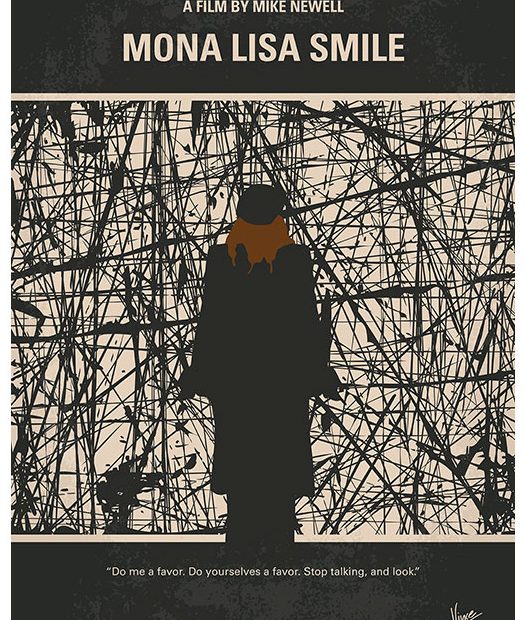
“Do me a favour, do yourselves a favour. Stop talking, and look”
 The D.O.T
These are words from a painful heart…
LikeLiked by 1 person